
Tulane reflects on Hurricane Katrina’s legacy 20 years later
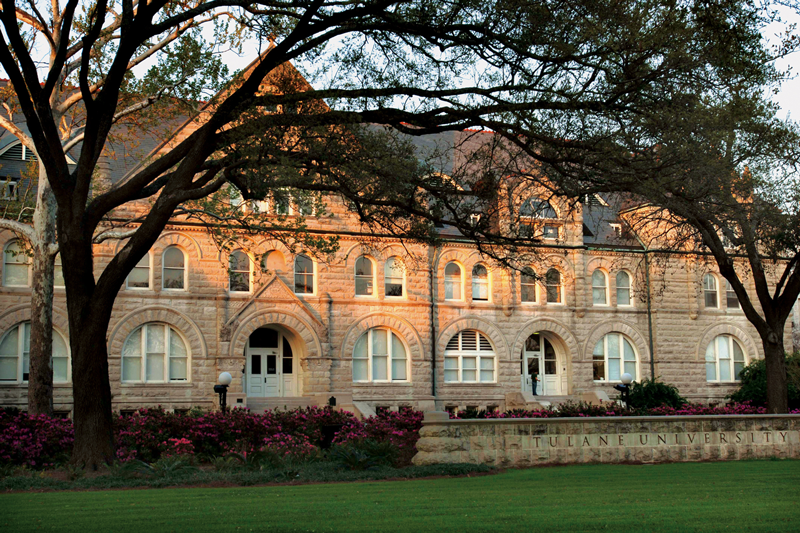
Twenty years ago, Hurricane Katrina devastated New Orleans, shutting down the university for a semester and scattering students to institutions across the country. In the storm’s aftermath, Tulane launched its Renewal Plan, a bold strategy that reshaped the institution’s future while also committing to the city’s recovery.
This fall, Tulane led a series of commemorative events to honor the 20th anniversary of the storm. Tulane President Michael A. Fitts moderated “Tulane Then and Now: A Conversation 20 Years After Katrina,” a panel discussion featuring university leaders and alumni who experienced the disaster firsthand.
At the panel, Fitts pointed to Tulane’s current trajectory, which includes growth in every facet of university life: record-breaking admissions, unprecedented research awards, recruitment of the best students, faculty and staff, as well as historic physical growth. The latter includes the university’s expanding footprint downtown — anchored by the transformation of the former Charity Hospital building into a hub of innovation, entrepreneurship and community. All of this reflects Tulane’s commitment to academic and research excellence and service to New Orleans, including the university’s $5.2 billion annual statewide economic impact.
The panel also featured university community members who endured Katrina and remain part of Tulane today, including Newcomb-Tulane College Dean Mollye Demosthenidy (L *07, PHTM *07); Dr. Lee Hamm, senior vice president and dean of the School of Medicine; senior professor of practice Peter Ricchiuti of the A. B. Freeman School of Business; Tulane Women’s Basketball Head Coach Ashley Langford (B ’09); and Dennis Lauscha, a member of the Board of Tulane and president of the New Orleans Saints and Pelicans.
The many ongoing Tulane efforts that are helping shape the city’s post-Katrina landscape are state-of-the-art health care, the Center for Public Service and lifesaving research and discovery. Helping rebuild the city’s skyline is Tulane’s School of Architecture and Built Environment. In the storm’s wake, URBANbuild and the Albert and Tina Small Center for Collaborative Design stepped beyond the classroom to help reimagine and rebuild a city in crisis. Over the past two decades, URBANbuild has designed and constructed 20 affordable, sustainable homes in neighborhoods hit hardest by the storm, while the Small Center has transformed dozens of community spaces — from gardens and classrooms to neighborhood hubs — into vital resources for resilience and renewal.
“Not only did the recovery re-energize Tulane,” said Fitts, who watched it unfold from afar as dean of the law school at the University of Pennsylvania, “it also demonstrated the worth of the university in an unprecedented way for the local community. Universities often struggle to articulate their value to the outside world. Their impact can be diffuse and difficult to convey, but in the aftermath of Katrina, our real impact on the city of New Orleans was clear.”
