
Alumna Spotlight: Kim M. Vaz-Deville, PhD (NC ’81, G *83)
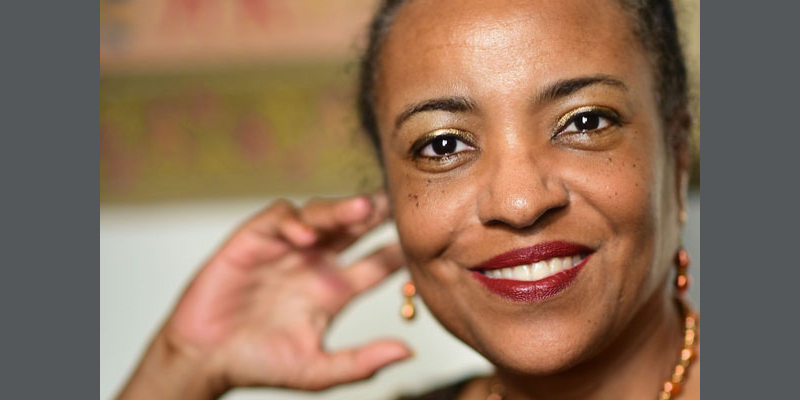
Tulane alumna Kim M. Vaz-Deville, PhD (NC ’81, G *83) is a professor of education at Xavier University of Louisiana. Her most recent work, “Mystery in Motion: African American Masking and Spirituality in Mardi Gras” opened at Louisiana State Museum’s Presbytère location where it will be showing until November 28. The exhibit, which Dr. Vaz-Deville co-curated, provides attendees with a rich understanding of the profundity of the cultural and spiritual traditions of Black masking in New Orleans through the presentation of more than two dozen suits, costumes, and masking components juxtaposed with African artifacts on loan from Musée du Quai Branly–Jacques Chirac of Paris and Southern University at New Orleans. The exhibition also features several dozen photographs, video projections, and video stations showing interviews with culture bearers. The exhibit is further slated to appear at the Musée du Quai Branly in autumn 2022.
In your Plug-In talk with Associate Vice President of Alumni Relations Lori Hurvitz, you described Mardi Gras Indian suits as ‘sanctuaries in motion.’ In what ways are Black masking garments acts of spirituality?
Ancestor remembrance, ancestor reverence, ancestor veneration — it is ubiquitous in Black New Orleans culture. You will see brass bands and people on their instruments with photographs of musicians who have passed on or other people who are important to them. You will see a funerary culture in which memorial t-shirts are really encouraged. For example, Sylvester Francis, founder of the Backstreet Culture Museum, who died recently, started the parades on All Saints Day to commemorate the so-called jazz funeral. I always like to add that African Americans in New Orleans had music accompanying the casket long before the invention of jazz. He wanted people to remember and to be educated and well-informed about that tradition. So, for 20 years, the [Backstreet] museum in collaboration with the Charbonnet-Labat-Glapion Funeral Home and the Rhodes Funeral Home, would commemorate that by recognizing culture bearers who had passed on. With the involvement of his board members, they began to make the live altars at the Backstreet Museum for the All Saints Day parade. People who had lost loved ones were able to memorialize them and put something on the altar in their memory. It became a living tradition. It was also a time when Victor Harris, who is the founder of Spirit of Fi Yi Yi and the Mandingo Warriors Black masking Indians, would teach some his unique sewing skills. These creations would become altar objects in memory of their ancestors using his sewing techniques.
I also want to talk about the role of what people call ‘medicine’ men and women. Those particular roles are all about the way that they use spirituality in their healing practices and how they infuse into their artistic production medicines, herbs, and things that come from the Louisiana swamp or Africa that symbolize certain aspects of power into the suits and costumes themselves. The personalities that are depicted and the personalities that are acted out as well are spirituality, such as Peteh Muhammad Haroon’s 2020 Black masking Indian suit. He is a member of the Nation of Islam and his suit has a portrait of the Honorable Elijah Muhammad. He is a trail chief, so his role is to protect the chief from behind. In that instance, he is not becoming spirit, but he’s wearing a religious leader and symbols on that suit that are important to him as a Black Muslim. Though he is working with a Mardi Gras Indian Black masking tradition, he is bringing his spirituality to that tradition, which opens it up.
Why was it important for you to do this project? Why is it important for a wider audience of people to understand the spiritual aspect of Black masking and how it ties to Afro-diaspora tradition?
Because it is impossible to understand the symbols of any particular suit or costume when you see it passing you on Mardi Gras day. It is impossible to study it, it is impossible to know what has been intended. There is a rise of spiritual components being added by a certain group of African American maskers. And that was something that was not being picked up by a lot of people. There has been some scholarship specifically on West African traditions among Black masking Indians. Some of it imposes West Africa religious practices on to particular maskers where it may not necessarily be consistent with how those maskers are intending themselves to be understood.
I thought it was important at this moment where people are feeling free to express their own spirituality in public, specifically on Mardi Gras day. The spiritual inclusions in Mardi Gras have been growing for more than 20 years. The exhibit does not impose interpretations on the culture bearers, but it is also allowing them to interpret for us what it is that they are doing intentionally. Spirituality is a growing phenomenon in Black masking, and it is more widespread than people know. It is also a return of Carnival to one of its intended purposes, which is part of the spiritual cycle of a community. All of these things have been part of many kinds of religious ceremonies, commemorations and festivals, but over time there came this separation between what was spiritual. The spiritual community began to distance itself from Carnival activities. These maskers are recovering that connection, reconnecting spirituality with its Carnival foundation. It is also because for some Black masking Mardi Gras traditions there are certain roles. Some people will say that is the only thing that is traditional and allowed. But culture morphs and grows based on the people who are practicing it! The exhibit is an effort to show people how these traditions are evolving. They are expanding the roles that people occupy within these groups. The exhibit alerts people that changes are being made and new roles being added. Through the exhibit people can come to understand them.
You hold a Bachelor of Arts in psychology from Newcomb and a Master of Education from Tulane. How does your Tulane education inform your work today?
One of my favorite classes was a religion class that I took at Tulane. I have always loved the study of religion. I think being exposed to a way to study religion as an undergraduate has always stayed with me. As an education graduate, I learned about pedagogy and have become interested in the concept of public pedagogy. I have my attention on how people are teaching these cultural traditions to make sure they are sustained.
In your talk with Lori, you discussed the importance of the exhibit showing video and, in doing so, letting people speak directly rather than presenting their stories through the lens of scholarly interpretation or analysis. Why is that aspect so important in your curation?
In order for us to appreciate what is going on, we need to know accurately from them what it is that they are doing and how they are defining ritual. The maskers are the people who are creating the knowledge, the skills, and the counternarratives. They are brilliant at it. There is no reason for them to be interpreted when they are scholars of their own creation.
You have referred to Black masking as ‘sanctified performances that are happening at the intersection of the neighborhood, the street, Carnival and the world of the spirits.’ Can you tell me about why that intersectionality is so important?
Religion gives people hope when there is no hope. Think about the enslaved people who were so religious and so spiritual. In a space of ongoing slavery, they needed something that said, ‘someday you will be free.’ Religion gave them that paradigm. It was the only thing that they had. They were surveilled constantly. The belief in the spirit is psychologically important because it says ‘I have an independence in my own body that nobody can determine. Nobody can determine my hopefulness or myself and what happens to my spirit beyond this world.’ So, there was a bit of autonomy there. Once they began to use certain biblical passages and biblical teachings, they knew what was happening to them was wrong and it served as a basis of political resistance.
In New Orleans because of the inequitable distribution of wealth and resources generationally, many African Americans did not necessarily own property. But if they lived in a place, even if they were renting, there has always been a sense of ownership of locale among Black New Orleanians. It’s ‘I’m from here.’ Whether you are renting or buying does not matter. It is just where you are from. And so, to enact these things in front of your neighbors is also really communal. That is where the political resistance lies. These maskers are acting within the history of disenfranchisement, segregation, the inability to pass down generational wealth, lives shortened because of segregation, not allowing Black people to have access to good medical care, enforced poverty, all of these activities are done in the space of resisting that belittlement and attempted genocide of a people. And it requires that your psyche be strong enough to be able to live within the box and yet think outside the box in a way that will not bring harm to you.
The exhibit is ultimately going on to Paris to the Musée du Quai Branly. What would you hope that audiences outside of New Orleans would learn from this exhibit?
First of all, the French have always been great appreciators of African American culture. We are bringing something to their knowledge that they really are not aware of, this vernacular culture that has been created by everyday Americans. The incredible amount of artistry in the suits and performance, because it is not one or the other. It is attire and it is song, dance, ritual happening together. This is to allow people in France to know something about African Americans that is not dictated by mainstream media and by ways that we have been spoken about by mainstream media. It shows how we are enacting sankofa, which is looking back to the past to bring things forward to the present. It is a Ghanian word that translates to ‘go back and get it.’
