
Tulanians play key roles in Super Bowl LIX preparations
By Mary Sparacello
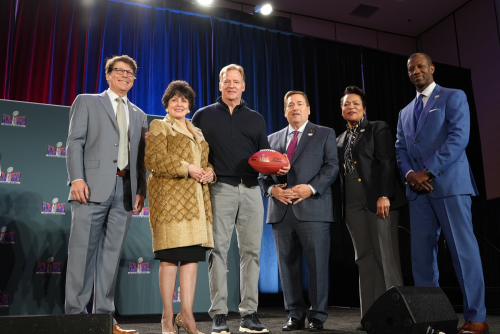
At the official NFL Super Bowl Handoff event in February 2024, Las Vegas ceremoniously passed the torch to New Orleans for Super Bowl LIX. Among the select few representing the Crescent City were Marcus Brown (B *02) — the Super Bowl LIX Host Committee chair — and Gayle Benson — owner of the New Orleans Saints and New Orleans Pelicans. Their leadership is pivotal as New Orleans gears up to host one of the biggest events in sports.
Brown and Benson are just two of the Tulanians playing key roles in preparing New Orleans for the big game on February 9.
For Marcus Brown, taking on the demanding role of Super Bowl Host Committee chair was an easy decision. As Entergy’s executive vice president and general counsel, his motivation was clear: “It’s the Super Bowl in the city where I live. A game that I love, and our company is deeply involved. All those things made it an easy choice,” he said. Entergy serves as a founding partner of the 2025 Super Bowl Host Committee.
Gayle Benson, an emeritus member of the Board of Tulane who was named an honorary Tulane alumna in 2014, has long been a prominent figure in New Orleans. In November, she and her late husband, Tom Benson, were inducted into the Greater New Orleans Sports Foundation Hall of Fame. During the honoree luncheon, Benson expressed her excitement and pride in bringing the Super Bowl back to her beloved city.
“One of the many things Tom and I shared is a passion for New Orleans and unwavering pride in the city we grew up in. We love hosting the Super Bowl because it gives us the chance to show off New Orleans to the rest of the NFL and fans across the world.
“This community takes so much pride in being great hosts, and please understand no other city is more appreciative of the opportunity to do so. The Super Bowl also provides another opportunity to our community that is particularly valuable in these times: the power to inspire and unite.”
The Super Bowl Host Committee plays a critical role in turning a city’s successful Super Bowl bid into reality. Once a city wins the bid to host the Super Bowl, it takes on a significant number of commitments — from ensuring the stadium is prepared to coordinating parking, hotel rooms, event spaces and security. The host committee is tasked with ensuring these promises are fulfilled.
“We work collaboratively with the NFL, the Saints, the city, the state, and serve as a liaison between these groups,” said Brown.
It’s a massive undertaking that requires seamless coordination, and it’s an essential part of making the Super Bowl an unforgettable event for New Orleans, which has been home to the event 11 times, tying with Miami for the most in history.
Tulane’s connection to the Super Bowl dates back decades: Tulane Stadium hosted the first three Super Bowls held in New Orleans, in 1970, 1972 and 1975. These early historic games helped establish New Orleans as a go-to destination for the NFL’s biggest event.
“People who have been here for the Super Bowl, they love coming back,” Brown said. “Add to that the food, the music, the culture, the uniqueness of our city. It is just a place that keeps drawing people back again and again.”
Among the preparations for Super Bowl LIX, ensuring the safety of attendees has been a top priority all along. After the tragic terrorist attack on Bourbon Street on New Year’s Day, the NFL released a statement, saying that “the NFL and the local host committee have been working collaboratively with local, state and federal agencies the past two years and have developed comprehensive security plans. These planning sessions will continue as they do with all major NFL events and we are confident attendees will have a safe and enjoyable Super Bowl experience.”
Walt Leger III (L *03), president and CEO of New Orleans & Company, the official destination marketing and sales organization for the New Orleans tourism industry, has been instrumental in promoting New Orleans as a premier location for major events like the Super Bowl.
After the New Year’s Day terrorist attack, Leger’s reassuring words appeared in news outlets far and wide: “New Orleans is uniquely built to host major events, meetings, and conventions, because of our world-class venues, culture, and walkability. Our preparation for upcoming events, and our community’s spirit and resilience, will not be deterred by this horrific act.”
The Super Bowl LIX Host Committee oversees 16 subcommittees, including the Supplier Diversity Program, chaired by Kim Boyle, a vice-managing partner at Phelps Dunbar and a longtime member of the Board of Tulane. Boyle, named an honorary Tulane alumna in 2011, leads the committee that worked to give opportunities for underrepresented local businesses to contract with the Super Bowl.
“Ensuring that diverse businesses would have an opportunity to participate in the Super Bowl is something that’s extremely important to me,” said Boyle. “I was privileged and honored to serve.”
A significant portion of the work on the ground was completed by the full committee, working collaboratively; NFL staff members who came to New Orleans on a regular basis to ensure that the committee’s work was progressing; and particularly, the local staff at the New Orleans Sports Foundation, led by Chincie Mouton, director of Community Engagement. Boyle said, “These are all the unsung heroes who have worked extremely hard to ensure that the Source Program met and exceeded its objectives.”
Kim Boyle’s role was largely public-facing, involving moderating panels, speaking before the City Council, speaking at multiple public forums and engaging with the media to ensure business people had the information they needed to participate in the program. “Our goal was to ensure access and opportunity … giving opportunities to many small businesses that would not otherwise have an opportunity to have a contract with the Super Bowl.”
Brown emphasized the significance of the work being done, saying, “Our intention is that the legacy of the Super Bowl will extend far beyond the game. Hosting Super Bowl LIX gives us the opportunity to unite and uplift our community in a meaningful and lasting way.”
Another Tulane alum, Tahj Williams (SoPA ’20), contributed her unique artistry to the Super Bowl by being the first local artist ever to design both the logo and the theme art for the big game. Williams is a graduate of the School of Professional Advancement’s technology program.
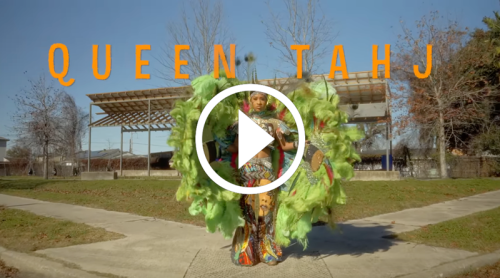
Williams, who is known as “Queen Tahj,” is a member of the Golden Eagles Tribe, hand-beaded the logo and the theme art. “For both pieces, Queen Tahj brings the spirit of New Orleans to life through her intricate, handsewn beadwork, which reflects her Black Masking culture and combines her tribe’s heritage with the vibrant energy of Super Bowl in the Crescent City,” according to an NFL news release.
Jeff Schiffman (B ’05, SCS *16), a member of the Tulane Alumni Association board of directors, will be contributing to Super Bowl LIX as an ambassador.
Marcus Brown explained the ambassador program, sponsored by Chevron, is a massive effort involving 7,000 volunteers from across the region. “They’re ready to help sell this city and support visitors. Who better to do that than the people who make New Orleans unique?”
Schiffman, who also served as an ambassador during the 2013 Super Bowl, reflected on the responsibility and excitement of being so close to the action.
“They have a whole group of ambassadors stationed at the airport, welcoming people,” Schiffman said. “Then you’re strategically placed all throughout downtown New Orleans leading up to the game. You’re a true ambassador, helping people find restaurants, guiding the press, and really showcasing the city.”
As football takes center stage in New Orleans, the Tulane Center for Sport is collaborating with Vicky Neumeyer (L *98), general counsel for the Saints and Pelicans, to organize an NFL speakers panel.
Additionally, the Center for Sport will host “Moving the Chains: A Conversation about Professional Football’s Impact on the Civil Rights Movement in New Orleans” on Feb. 3 at 4:30 p.m. in the Law School’s Weinmann Hall Room 110. This public event will feature Pro Football Hall of Famers Bobby Bell and Ron Mix alongside author Erin Grayson Sapp (SLA ’07, SLA *13).
The panel will revisit the historic 1965 pro football All-Star game at Tulane Stadium, where Bell, Mix and other players walked off the field in protest of segregation. Sapp’s book, Moving the Chains, examines the events surrounding that protest, the city’s successful bid to secure the New Orleans Saints franchise and the broader role of sports in driving social justice and social change.
