
Tulane celebrates impactful faculty members Thomas Reese (A&S ’65) and Beth Wee as they retire
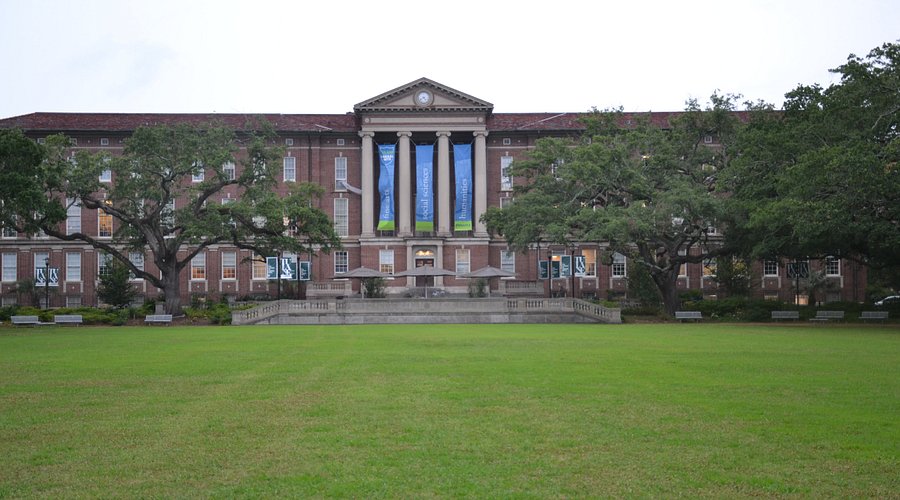
This spring Tulane University will bid farewell to two remarkable leaders whose commitment has transformed the learning experience of countless students and the culture of the university as a whole. With a combined 63 years of service, Dr. Thomas Reese and Dr. Beth Wee have both left indelible marks on Tulane through their commitment to academic excellence and the university community.
Thomas Reese, a New Orleans native and Tulane alumnus, graduated in 1965 before heading to Yale for graduate work in art history. After holding faculty and leadership positions at the University of Texas at Austin and the Getty Research Institute, Reese returned to his hometown in 1999 to become the executive director of the Roger Thayer Stone Center for Latin American Studies.
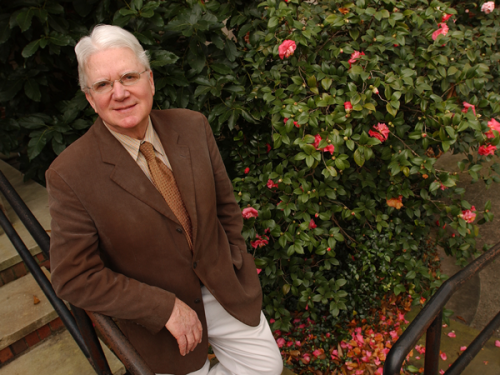
“I was extremely impressed by the search committee,” Reese said of his decision to return. “They were excited about doing new things, about bringing the Stone Center to the next level. And that was the very thing that brought me back.”
Over 26 years, Reese grew the Stone Center into a nationally recognized leader in Latin American studies. Under his direction, the center expanded its interdisciplinary reach, coordinating the research and teaching of over 70 core faculty and 35 affiliated faculty and adjuncts from schools and departments across Tulane. Reese further burnished the center’s reputation as a bastion of cutting-edge research, dynamic teaching and transformative study abroad opportunities.
“He greatly expanded its intellectual reach, drawing in professors, students and programs from across the university and creating a vibrant constellation of scholars. He ensured that the Stone Center supported us all — intellectually, pedagogically and often financially,” says Elizabeth Boone, professor emerita in art history.
At the same time Reese was growing the Stone Center, Beth Wee was steadily shaping the landscape of education at Tulane — particularly in the area of neuroscience. Arriving in 1988 after transferring a postdoctoral fellowship from Northwestern University, she began her time at Tulane teaching at University College and working as the laboratory coordinator for the Department of Cell and Molecular Biology and the Department of Ecology and Evolutionary Biology as well as teaching psychology courses. Wee soon expanded her influence across teaching, advising and academic administration.

One of her most enduring contributions is the co-founding of the undergraduate neuroscience major, which was one of the first of its kind in the nation. “We started with a vision,” Wee said, “and today it’s one of the strongest programs on campus.” She also helped direct the university’s neuroscience master’s program and played a key role in developing the Tulane Brain Institute, serving on its Executive Committee since its founding in 2016.
Wee’s ongoing research in neuroendocrinology and animal behavior served as the basis for her teaching, but her reach at Tulane extended far beyond the lab, with several students counting her as “life changing.” She served as associate dean in the School of Science and Engineering, directed the Grand Challenge Scholars Program, co-taught the Newcomb Scholars capstone course and led summer study abroad programs in Copenhagen and Stockholm. She further represented Tulane on international delegations, including a State Department trip to Pakistan and a university tour in New Zealand.
Though Wee came to Tulane as a researcher, she quickly developed a remarkable aptitude for forging impactful connections between faculty, students and alumni. “What gets me excited is the people interacting,” says Wee. “I like the interactions with my colleagues and my students. It’s problem solving, and I love doing that.”
Both Wee and Reese emphasized personal networks and relationship-building as foundational to their impact at Tulane. For Wee, staying connected with former students — many of whom return to visit — is one of the most rewarding aspects of her career. Reese, too, takes pride in the strong faculty networks and collaborative academic culture he fostered at the Stone Center.
They also helped guide Tulane through periods of profound change, including Hurricane Katrina and the COVID-19 pandemic. “Those times were challenging,” Wee remarked, “but they also revealed the resilience and dedication of our community.”
As they each prepare for retirement, they look forward to new adventures, travel and time with family. But neither plans to sever ties with the university they’ve called home for so long.
“Tulane has been a wonderful home for my academic life,” Wee says. “I look forward to staying connected with the Tulane community”.
