
Building community: from Tulane to the Marine Corps and back home
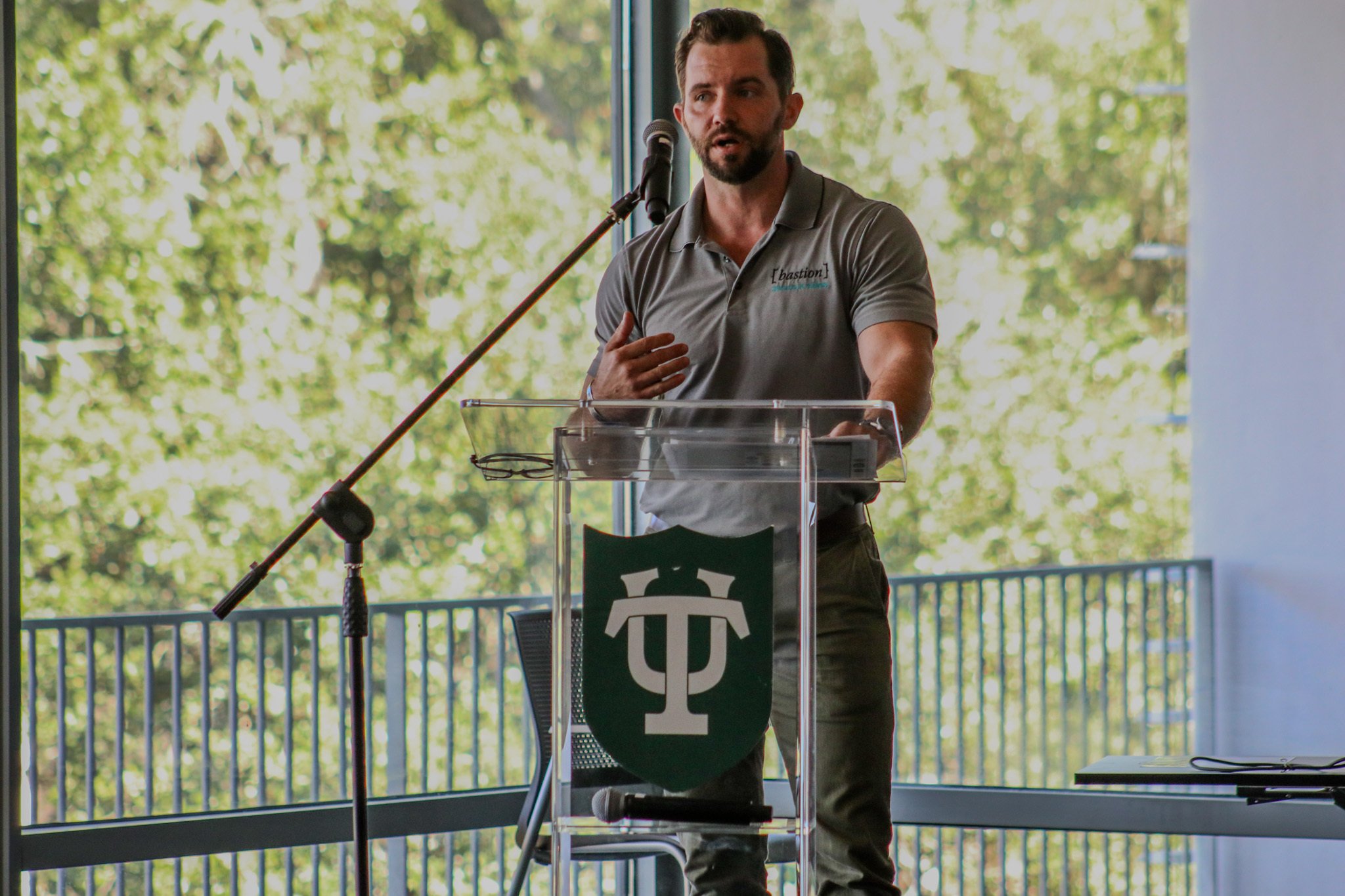
Jackson Smith (SLA ’07, L *18) came to New Orleans in 2003 to attend Tulane as an undergraduate and has called it home ever since. Today, he leads the Bastion Community of Resilience for veterans in Gentilly and stays closely connected to Tulane, particularly with the alumni and veterans networks. Recently, he returned to campus for Military Appreciation Weekend, emphasizing the importance of staying connected.
As a teenager in Washington, D.C., Smith was determined to join the Marine Corps right after high school, driven by a strong sense of duty. “9/11 had just happened my junior year of high school, and so I knew the first thing I wanted to do was go to boot camp and go into the Marines right away,” he recalls. However, his father, a Vietnam War enlistee, who went to college before enlisting, but dropped out in the middle of school to join the Marines, encouraged him to pursue higher education first.
Smith chose Tulane because he fell in love with New Orleans, drawn in by the city’s energy and character. At Tulane, he immersed himself in campus life, joining the ROTC program and becoming active in his fraternity.
“I loved every second of my time at Tulane,” says Smith, who was especially affected when Hurricane Katrina hit at the beginning of his junior year. “I was so struck by the resilience and the love between people in this city, and it really impacts a lot of the work that I do now. I had never seen people who had been through so much and still found ways to give to each other, to pull up seats at their tables.”
He entered the Marines after Tulane, hoping to become an infantry officer, and in January 2010, he was a platoon commander with 78 marines and sailors under his command. “Off we went into the fight, into the Battle of Marjah, which was the largest offensive operation of the war,” he says. “All 78 of those Marines and sailors came home. That was — until my first daughter was born — the proudest achievement of my life.”
In 2011, he was recognized as the Second Marine Division’s Platoon Commander of the Year.
He completed two deployments to Afghanistan, followed by additional deployments around the world, such as participating in the evacuation of the American embassy in South Sudan. After eight years of active deployment, instead of taking an office job with the Marines, he decided to return home — to New Orleans.
“I missed eight Mardi Gras and eight Saints seasons,” says Smith. “I found out that we won the Super Bowl while I was sitting in a foxhole in the rain, so I was ready to come home at that point.”
The GI Bill helped pay for law school, and, just like he had hoped, Smith was warmly welcomed into the veterans community in New Orleans and at Tulane. It was in law school that he met his wife.

He graduated from Tulane Law School in 2018 and began his career in private practice. Not long after, he learned about the Bastion Community of Resilience, a unique residential community in Gentilly for injured veterans and their families. Initially joining as a board member, Smith quickly became inspired by Bastion’s mission and the potential for meaningful impact.
Now, he serves as the executive director, taking over from Bastion’s founder. Comprised of 58 homes for veterans and their families, Bastion is the only intentional veterans’ community of its kind, Smith says. “I had a dream job as a Marine, and I thought the great challenge of my life would be facing the fact that it was over,” Smith reflects. “But I have won the lottery again. Bastion is an extraordinary organization … Every person in our city should be proud that this started here.”
Beyond his role with Bastion, Smith remains deeply engaged in the Tulane alumni community. Returning to campus for Military Appreciation Weekend was particularly meaningful for him, as it reinforced both his connection to the university and Tulane’s commitment to supporting veterans.
One of the standout moments, he recalls, was attending a panel that explored the university’s efforts to enhance support for veteran students. The discussion highlighted Tulane’s proactive approach to fostering a welcoming and supportive environment for those who have served.
I missed eight Mardi Gras and eight Saints seasons. I found out that we won the Super Bowl while I was sitting in a foxhole in the rain, so I was ready to come home at that point.”
Jackson Smith (SLA ’07, L *18)

Smith also took part in a panel where he shared insights about Bastion as well as the New Orleans Veterans Coalition, an alliance of organizations dedicated to veteran support throughout the region.
Tulane’s dedication to veterans doesn’t surprise him.
“The city of New Orleans brought me to Tulane, and I very much fell in love with both,” he says. “The way that the university has embraced its role as a leader in creating positive change … really means the world to me.
“As somebody who has made it his life’s work to serve this community, I couldn’t imagine trying to do that without Tulane.”
